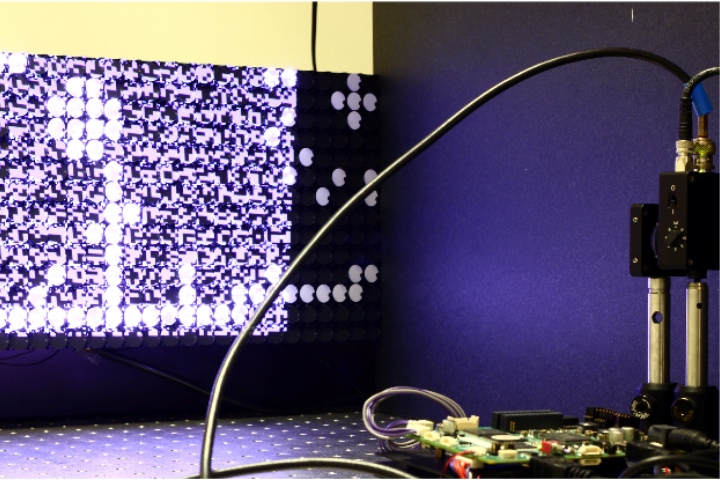
Single pixel imaging
Dr Michael Mazilu School of Physics & Astronomy An image is worth a thousand words. This statement holds not only true in every day life but even more so in science.
Research at the University of St Andrews is conducted across all subjects to make new discoveries and improvements, both within and without academia.
Dr Michael Mazilu School of Physics & Astronomy An image is worth a thousand words. This statement holds not only true in every day life but even more so in science.

Dr José A. Fuentes and Dr Matt L. Clarke School of Chemistry Catalysts are widely used to speed up chemical reactions without actually getting used up in the process. They are one of the core aspects of making greener…
Dr Eli Zysman-Colman School of Chemistry Compounds emitting from a thermally activated delayed fluorescence (TADF) mechanism can harvest both singlet and triplet excitons, which traditional fluorescent emitters are…
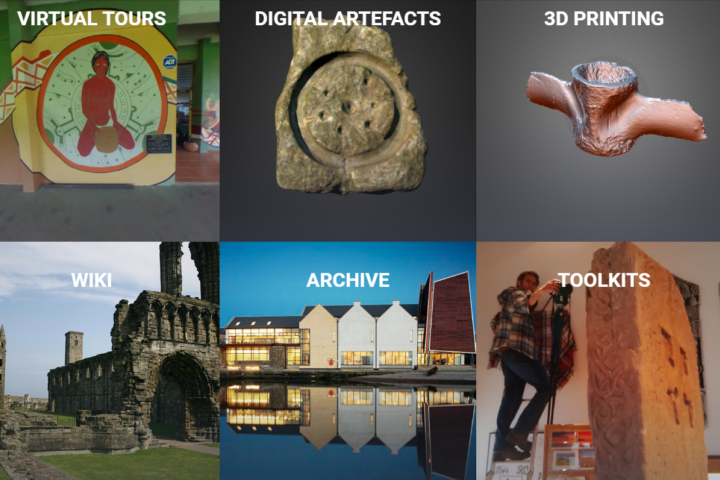
Dr Alan Miller, Dr Karen Brown & Catherine Cassidy | School of Computer Science, School of Art History & Open Virtual Worlds Recent advances in the computational power and graphic capabilities of mobile phones and…
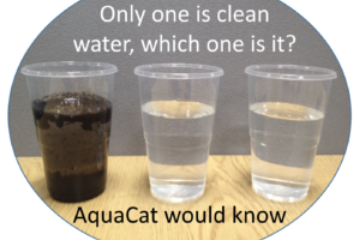
Dr David Harris-Birtill and Mr David Morrison School of Computer Science The AquaCat project makes use of low-cost miniaturized radar technology and machine learning in order to reliably detect water pollutants.
The East Sides of cities such as London, Vancouver, New York and Paris have historically been the poorest. Some, but not all, have gentrified more recently, and this gentrification has been at the centre of media…

Museums can provide vital services to their communities, providing under-represented people with a chance to stake a place in history, as well as contributing to sustainability, community empowerment and links between…

In 1941, William Sellers, the head of the recently formed Colonial Film Unit (CFU), published an article about African audiences, entitled ‘Films for Primitive Peoples’, in which he proposed a model for mobile film…

Light Box celebrates light in all its aspects – solar, sacred, scientific, nourishing, and poetic. Produced as a result of meetings between Professor Crawford and McBeath and contemporary physicists whose work centres…

So why did I, a physicist who is most at home in the darkened, well-controlled confines of a laser laboratory, find myself dressed in high-viz clothing climbing aboard a big orange ship in Tasmania in January 2016…